

Cupellation is the final step in the fire assay process. Two specifications decide how well a cupel performs at that stage: magnesia content and moisture percentage. This guide covers what a fire assay cupel is, why magnesia content and moisture percentage matter, the temperature range cupels are built to handle, and the sizing and supply options available when you are specifying or reordering a batch.
What a Fire Assay Cupel Actually Does
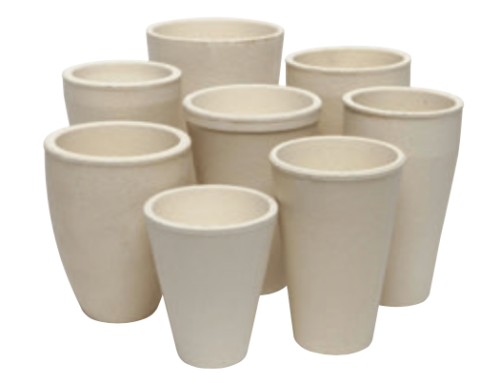
A fire assay cupel is a small, porous vessel used in cupellation. During cupellation, molten lead containing the precious metal content is absorbed into the walls of the cupel, leaving behind a bead of gold and, where present, silver, which is then weighed to produce the final assay result. Annexus WA supplies fire assay cupels as part of its Fire Assay Consumables range, in standard and custom sizes, and the range has been trialled and qualified by leading international fire assay laboratories.
Why Magnesia Content Matters
Magnesia content is one of the two specifications that determines how well a cupel performs. A high magnesia content supports correct absorption levels, allowing the cupel to draw lead away from the precious metal bead as intended. This is why magnesia content is treated as a core specification for fire assay cupels rather than a background detail of the manufacturing process.
Why Moisture Percentage Matters
Moisture percentage is the second specification that determines cupel performance. A low moisture percentage reduces the risk of the cupel cracking when it is exposed to furnace temperature. Because cracking during firing affects the cupel’s structural integrity, moisture percentage is controlled alongside magnesia content rather than treated as a separate or secondary requirement.
The 900 to 1000 Degree Operating Window
Fire assay cupels are designed to operate within a temperature range of 900 to 1000 degrees Celsius, the typical band for the cupellation stage of fire assaying. Correct absorption within this range depends on magnesia content and moisture percentage both being within specification, since these are the two properties that most directly affect how a cupel behaves under heat. This is separate from the higher temperature range used for other Fire Assay Consumables items, such as furnace and kiln batts, which are rated to a maximum operating temperature of 1300 degrees Celsius.
Manufacturing Consistency Across Every Batch
Annexus WA’s Fire Assay Consumables, including cupels, are produced using fully automated equipment. This is part of the broader approach behind the range: to ensure consistent delivery of high-quality products and to supply consumables that have been trialled and qualified by leading international fire assay laboratories rather than sold on spec sheet claims alone.
Standard and Custom Sizing
Fire assay cupels are available in a comprehensive standard size range, with custom sizing available on request. This gives laboratories the flexibility to match cupel sizing to a specific furnace configuration or sample requirement, rather than being limited to standard dimensions alone.
Where Cupels Sit Within Annexus WA’s Fire Assay Range
Fire assay cupels are one part of a wider Fire Assay Consumables range. The same range includes:
- Fire assay crucibles
- Furnace and kiln batts
- D-mould muffles and vents
- Fibre blankets and boards
- Ceramic anchors
- Laboratory products
All of these are produced using fully automated equipment as part of the same approach to consistent, high quality supply.
Why This Supply Model Exists
Annexus WA was established in 2013 for three reasons:
- To shorten the supply chain of quality fire assay consumables by supplying product direct from source to site
- To offer a complete package by managing the full procurement cycle, from design and engineering through to production, quality assurance, clearance and delivery
- To offer a comprehensive range of consumables produced on fully automated equipment
Fire assay cupels are supplied under this same model.
How Cupels Are Supplied, From Cartons to Full Container Loads
Fire assay cupels are supplied under the same model as the rest of the Fire Assay Consumables range:
- Stock holding for smaller or more frequent orders, delivered in cartons, pallets, crates, or as less than container load (LCL) shipments
- Direct delivery of larger volumes as 20 or 40 foot full container loads (20/40FCL) to a client’s facility
This supply model serves laboratories across Africa, Australia, Asia, South East Asia, Europe, North America and South America.
Sourcing Cupels You Can Rely On Every Firing
Annexus WA was established in Wangara, Perth in 2013 to shorten the supply chain for quality fire assay consumables, managing the full procurement cycle from design and engineering through to production, quality assurance and delivery. Fire assay cupels fall within the same Fire Assay Consumables range as crucibles, kiln batts, muffles and vents, and laboratory ceramics. Annexus WA’s stated positioning is Western Australia’s leading supplier of industrial ceramics and fire assay consumables, serving the mining and resources sector, the industrial brick making industry, and laboratory industries both nationally and globally. If you are reviewing your current cupel specification or setting one for the first time, you can reach out to our team at solutions@annexuswa.com or on +61 08 9302 2576 to talk through magnesia content, moisture percentage, and sizing for your furnace and sample volumes.


Leave A Comment